



2025 Black Label Nautilus® near Burton, OH

The 2025 Lincoln Black Label Nautilus® represents a methodical integration of hybrid propulsion, digital interface systems, and comprehensive driver assistance technologies. Configured to align with midsize luxury SUV standards, this model delivers a modular approach to functionality with no emphasis on stylistic excess. Its structural elements, powertrain options, and cabin control systems are developed to support consistent output and long-term mechanical efficiency.
The 2025 Lincoln Black Label Nautilus® adds design-specific elements and interior appointments. It incorporates a turbocharged hybrid engine, all-wheel drive, a continuous power delivery system, and an array of embedded sensors and user interfaces. Its exterior construction focuses on aerodynamic utility, and its interior platform emphasizes responsive touchscreen management and data-based customization.
Turbocharged Hybrid Configuration and Vehicle Dynamics
The 2025 Lincoln Black Label Nautilus® features a fourth-generation 2.0-liter inline-4 turbocharged engine, paired with an electric motor system for hybrid operation. This powertrain achieves a total system output of 310 horsepower, utilizing coordinated input between combustion and battery-supported propulsion. The system does not use conventional shifting, instead operating through an electronically controlled continuously variable transmission (eCVT) that regulates torque flow without interruption.
All-wheel drive is included as standard equipment. Torque is distributed to the front and rear axles based on sensor input from traction control modules and throttle feedback. The drivetrain adjusts for wheel slippage, surface irregularity, and grade incline without user intervention. Cooling systems for both the internal combustion engine and the battery pack maintain consistent operating temperatures using electronically modulated fans and thermal exchange units.
Drive mode selection allows users to engage predefined calibration profiles. These include Normal, Conserve, Excite, Slippery, and Deep Conditions. Each mode affects throttle sensitivity, steering response, regenerative braking behavior, and drivetrain biasing. Sensor data from wheel angle, yaw rate, and torque demand informs system adjustments in real time. Battery thermal regulation is performed continuously to prevent temperature deviation during high-load events.
Structural Design and Functional Aesthetics
The Jet Appearance Package includes design modifications that serve functional and visual roles. The front grille is finished in black, with matching lower fascia and mirror caps. These elements contribute to airflow control around the vehicle’s leading surfaces. Wheel designs exclusive to the 2025 Lincoln Black Label Nautilus® are produced in high-strength aluminum alloys and optimized for brake ventilation. The lower body receives black-accented moldings that align flush with door contours to reduce aerodynamic drag.
Aerodynamic performance is enhanced through the taper of the roofline, recessed door handles, and a wind-cheating underbody panel. Air is routed under, over, and around the chassis using minimal resistance surfaces. Lighting systems are composed of adaptive pixel projector headlamps. These modules adjust beam patterns based on speed and steering angle input. Rear LED assemblies include integrated photoreceptors that adjust light intensity in response to surrounding brightness.
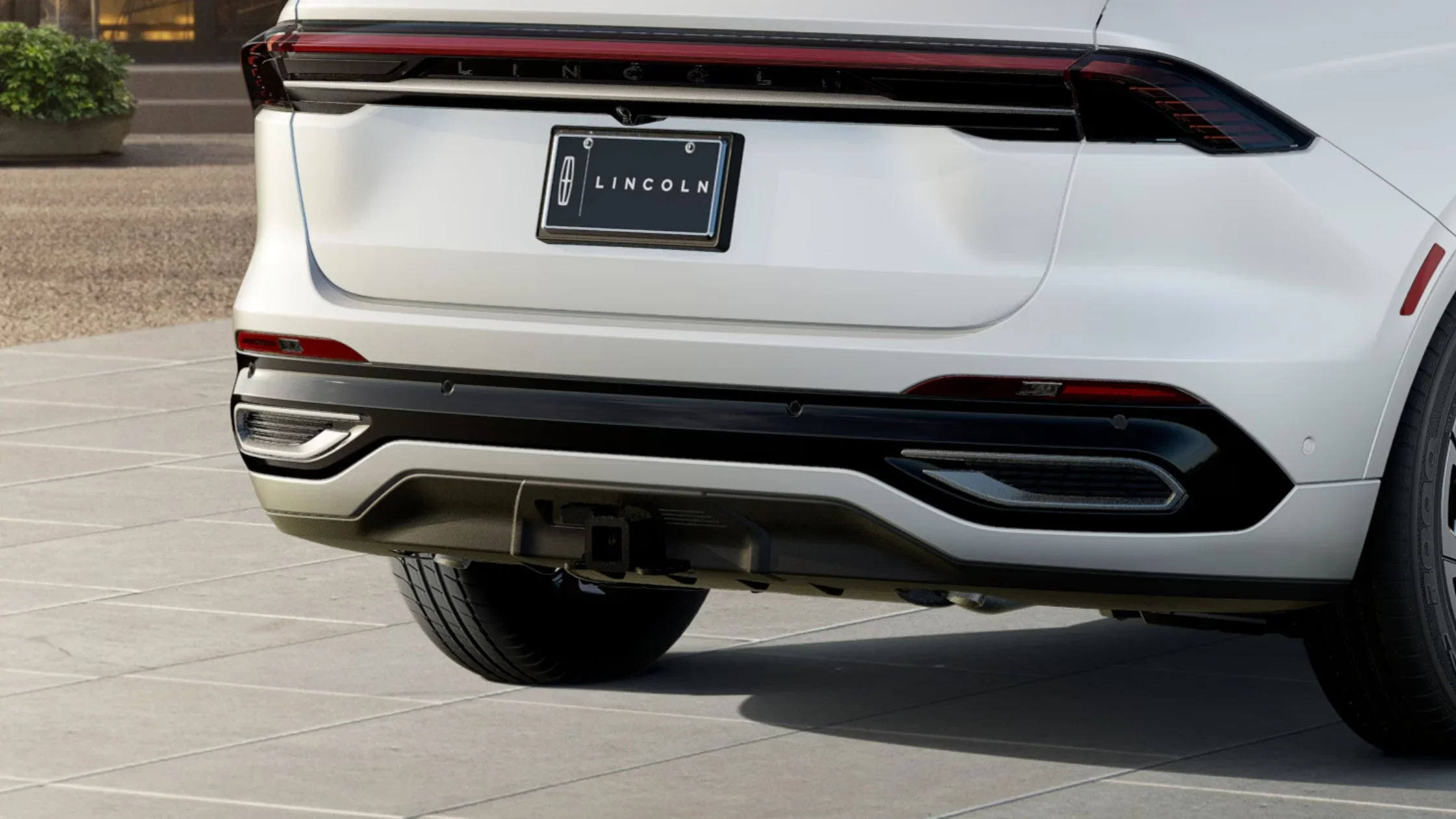
Cameras, radar units, and ultrasonic sensors are embedded in the front grille, side mirrors, and rear fascia. These installations are concealed within aerodynamic housings that preserve the vehicle’s drag coefficient and maintain unobstructed field views for sensor processing units.
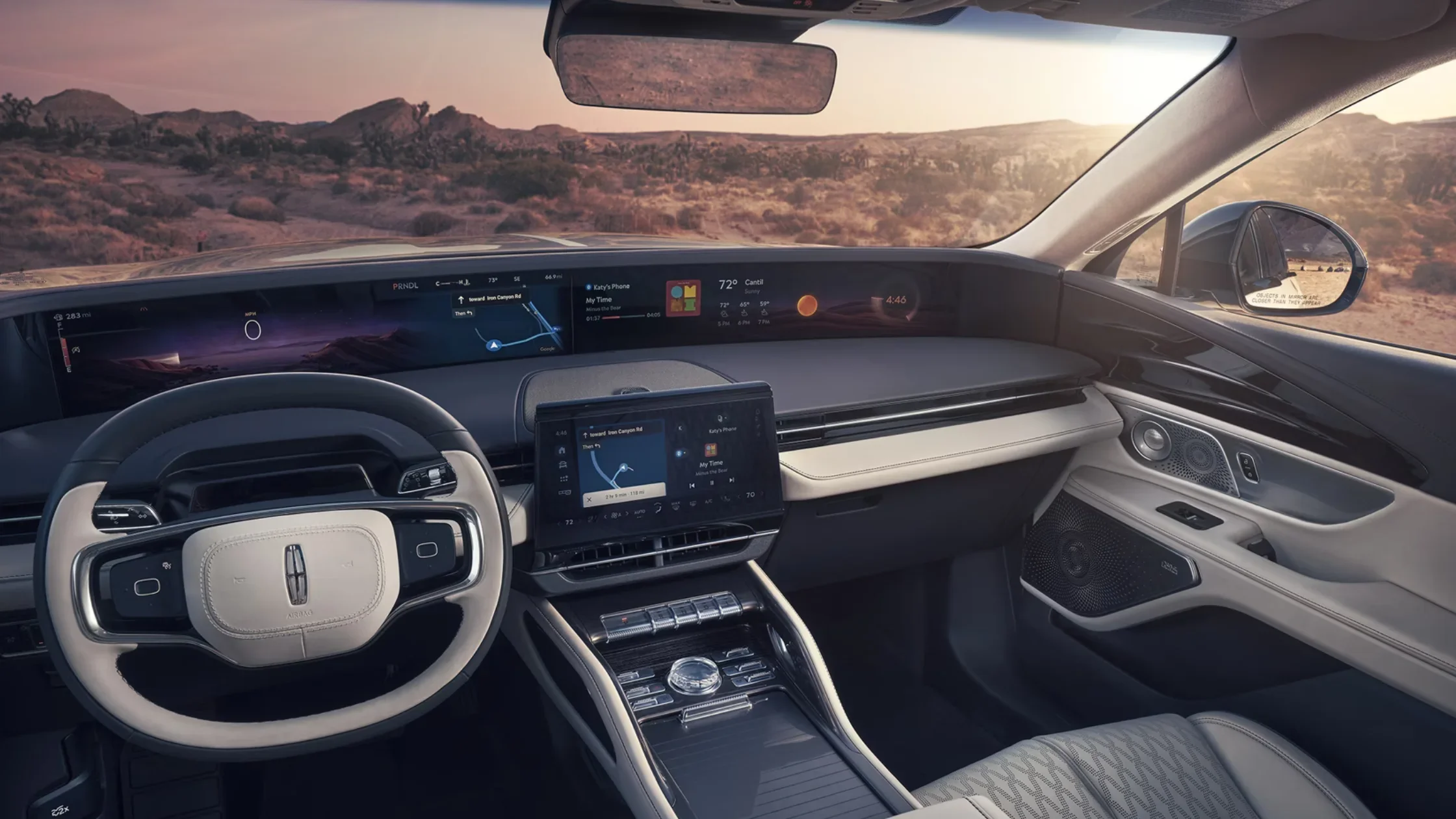
Vehicle Display and Cabin Technology Configuration
The vehicle’s cabin features a 48-inch panoramic display that extends the full width of the dashboard. It provides real-time vehicle telemetry, navigation, and multimedia functions. Display segmentation is controlled via software and can be reassigned based on driver preference. The 11.1-inch vertical touchscreen located in the center stack serves as the primary interface for HVAC settings, drive mode adjustment, and infotainment control.
The Lincoln Digital Experience allows software-level control over graphical layout, icon placement, and operating themes. Applications and menus can be repositioned using drag-and-drop functionality. The system supports over-the-air updates for firmware revisions and feature additions. Wireless Apple CarPlay® and Android Auto™ are integrated, operating without the need for physical connections.
Voice command operations are enabled through Amazon Alexa and Google Assistant. Microphones embedded throughout the cabin employ noise cancellation and beamforming techniques to isolate commands. Voice inputs can manage audio playback, adjust climate zones, and request navigation assistance. Data is processed through cloud-based systems and encrypted before transmission.
Optional audio output includes a Revel® Ultima 3D system, which deploys 28 individually tuned speakers. Frequency response is balanced through cabin-specific acoustic modeling. The headliner, door panels, and seatbacks are constructed with embedded noise-reducing materials, contributing to internal sound regulation without additional mechanical input.
Hybrid Energy Allocation and Efficiency Processes
The hybrid system coordinates electric and gasoline propulsion through system logic based on operating conditions. At low speeds and during idle-coast phases, the vehicle prioritizes electric motor usage. Under high-load conditions such as acceleration or hill climbing, both engine and electric motors are engaged. This transition is seamless due to torque-matching algorithms managed by the hybrid control unit.
Regenerative braking is employed during deceleration phases. Frictional energy is captured and converted to electrical charge through motor inversion. This energy is then stored in the lithium-ion battery pack, with charging intensity controlled to avoid cell degradation. The battery cooling system engages at defined thermal thresholds to prevent overheating.
Diagnostic data from powertrain sensors is analyzed continuously. The system identifies inefficiencies in combustion cycles, battery charge/discharge patterns, and electric motor performance. When irregularities are detected, the onboard system generates service notifications or initiates adaptive recalibration. These adjustments preserve drivetrain efficiency across variable operating conditions.
Driver Monitoring and Assistance Protocols
Lincoln Co-Pilot360™ 2.2 is standard on the 2025 Lincoln Black Label Nautilus®. This driver-assist suite includes adaptive cruise control with lane centering, blind spot monitoring with cross-traffic alert, and Intersection Assist 2.0. Forward-facing radar and camera arrays calculate following distance, closing speed, and lateral positioning.
Intersection Assist 2.0 evaluates approaching side traffic and halts forward progress if collision probability is calculated above the system threshold. Pre-collision assist includes pedestrian detection and activates automatic emergency braking if the system calculates non-response from the driver.
The 360-degree camera system merges input from multiple exterior cameras to create a synthesized overhead view. This assists in parking, tight space navigation, and obstacle avoidance. Reverse brake assist uses ultrasonic sensors to detect rearward obstructions and initiates automatic braking based on object proximity and reverse gear velocity.
Connectivity, Infrastructure, and Remote Control Features
Lincoln Connect™ is embedded within the vehicle to enable onboard data access and system updates. The Wi-Fi hotspot function supports up to ten devices simultaneously. It activates upon connection with the Lincoln Way™ App, which also manages remote engine start, vehicle lock/unlock, and real-time location tracking.
Over-the-air update capabilities allow the vehicle to receive software upgrades, system patches, and interface enhancements without requiring physical service visits. Navigation, weather, and traffic overlays are maintained through active data feeds. Software updates are installed through background processing and confirmed through system diagnostics upon installation completion.
Microphone systems are designed with multi-channel input recognition to differentiate between driver and passenger voice commands. Security protocols prevent unauthorized system access through layered encryption and authentication keys. Connectivity systems limit communication with external networks outside of predefined domains to maintain operational integrity.
Visit Nick Mayer Lincoln Mayfield for a Test Drive
The 2025 Lincoln Black Label Nautilus® offers hybrid system testing, display responsiveness assessment, and interface evaluation through an in-person demonstration. A scheduled test drive at Nick Mayer Lincoln Mayfield near Burton, OH, allows prospective users to examine drivetrain calibration, assistive safety functions, and digital system configuration in real-world conditions. Participants can validate the performance of the all-wheel drive system, regenerative braking feedback, and adaptive cruise capabilities. The session also provides access to user-customizable interface features, voice-command responsiveness, and connected service integration. For a complete operational review, booking a drive session offers direct engagement with the vehicle’s core technical systems.CONTACT US FOR MORE INFORMATION