



2025 Aviator® Reserve near Aurora, OH
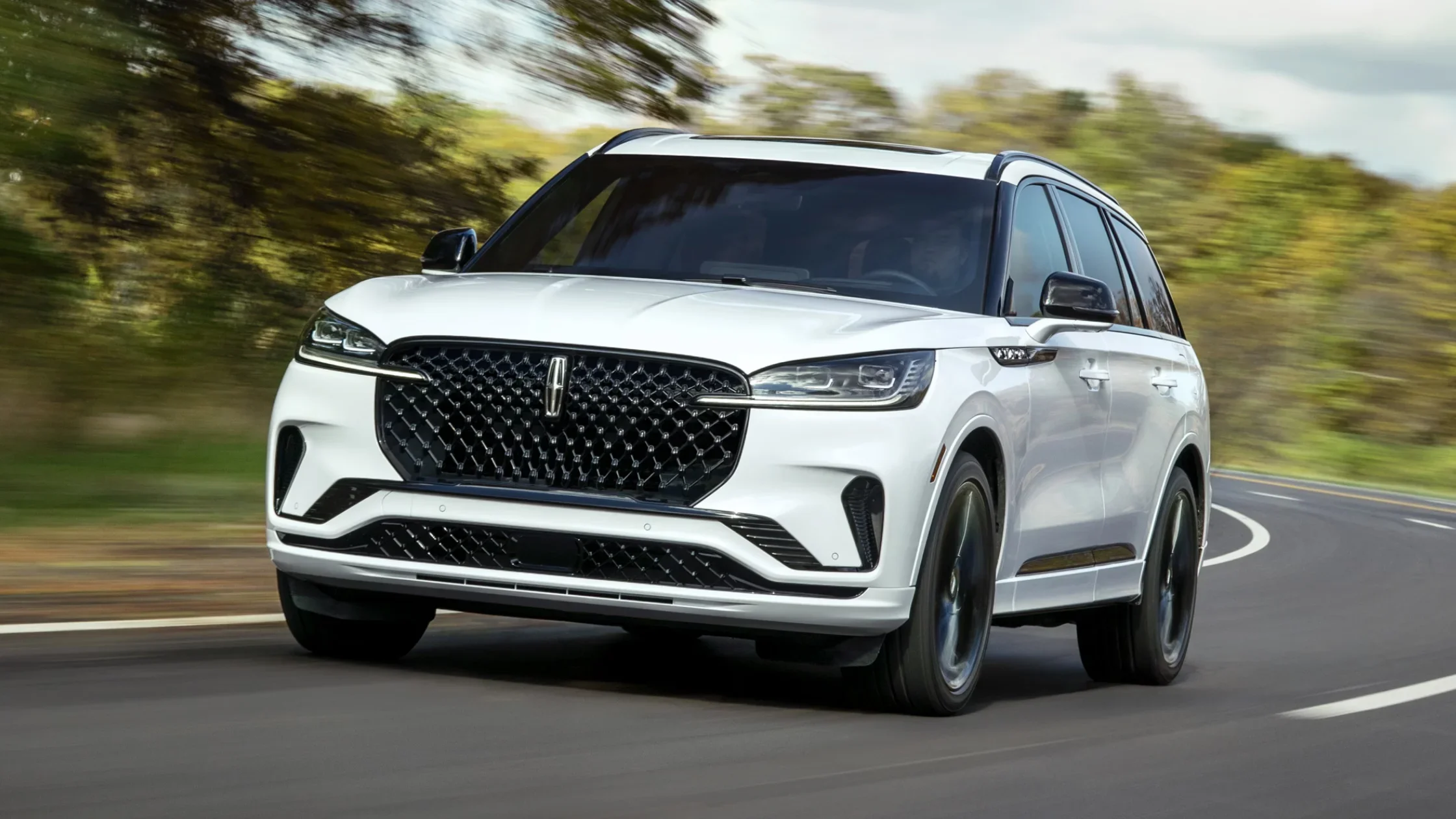
The 2025 Lincoln Aviator® Reserve represents a refined approach to advanced automotive design, integrating technical excellence with adaptable performance systems and detailed craftsmanship. Its engineering focuses on balanced power, efficient control, and technology that supports both driver awareness and passenger comfort. Developed with a clear emphasis on structural integrity, electronic precision, and dynamic driving behavior, the 2025 Lincoln Aviator® Reserve demonstrates how intelligent systems can complement mechanical power to deliver a composed and capable experience.
Performance and Powertrain Engineering
The 2025 Lincoln Aviator® Reserve features a 3.0-liter twin-turbocharged V6 engine designed for consistent output across varied conditions. The configuration produces an estimated 400 horsepower when using premium fuel. This engine employs twin turbochargers for immediate throttle response and optimized air delivery to each cylinder bank. Its design ensures reduced turbo lag and smooth torque distribution across the rpm range, maintaining steady acceleration through all drive modes.
The engine is paired with a 10-speed SelectShift® automatic transmission, calibrated for precise ratio management and gear selection. This transmission utilizes electronic controls to adapt shift timing based on load, throttle input, and gradient, maintaining the most efficient balance between performance and economy. Power delivery remains steady during upshifts and downshifts, resulting in predictable handling in both highway and low-speed driving environments.
The available Intelligent All-Wheel Drive system enhances traction by monitoring wheel slip and redirecting torque between the front and rear axles. This system improves cornering precision and control under variable surface conditions. Drivers can select between multiple drive modes, allowing the 2025 Lincoln Aviator® Reserve to adjust throttle sensitivity, steering feel, and suspension response accordingly.
The Adaptive Suspension with Road Preview further refines ride quality through a camera-based detection system that monitors the surface ahead. When irregularities are detected, the suspension proactively adjusts damping forces to minimize vibration and maintain stability. This predictive adjustment ensures the 2025 Lincoln Aviator® Reserve delivers consistent composure across urban roads, highways, and uneven terrain.
Exterior Design and Structural Composition
The body structure of the 2025 Lincoln Aviator® Reserve combines aluminum and high-strength steel components to reduce overall weight while maintaining rigidity. The aerodynamic profile contributes to reduced drag and enhanced fuel efficiency without compromising visual presence. The proportions emphasize stability, supported by a long 119.1-inch wheelbase and an overall length of 199.3 inches, which optimizes cabin space and weight distribution.
Standard 21-inch aluminum wheels reinforce the vehicle’s grounded stance, while Adaptive Pixel LED headlamps improve illumination control by adjusting beam patterns based on driving speed and ambient conditions. Integrated LED taillamps and a power liftgate complete the exterior’s functional design, supporting visibility and convenience without unnecessary ornamentation.
The design also incorporates acoustic laminated glass and aerodynamic mirror housings to reduce wind noise, aligning with the emphasis of Lincoln on quiet operation. Each exterior component contributes to function and performance rather than purely aesthetic appeal, reflecting an engineering-first approach to form.
Interior Systems and Cabin Functionality
Inside the 2025 Lincoln Aviator® Reserve, engineering precision extends to material construction and environmental control. The cabin accommodates up to seven passengers, featuring a PowerFold® third-row seat and available second-row captain’s chairs for layout flexibility. The second and third rows fold electronically to expand cargo volume, allowing the 2025 Lincoln Aviator® Reserve to adapt to both passenger and utility requirements.
The front seats feature Perfect Position technology, offering 30-way power adjustability with Active Motion® massage capability. This design distributes body pressure evenly and provides multi-point adjustment to improve posture during extended drives. The surfaces are finished in premium leather trim, with stitched detailing that enhances durability and resistance to wear.
Cabin comfort is managed by quad-zone electronic climate control, providing individual temperature regulation for front and rear occupants. The system integrates cabin humidity sensors and particulate filtration for consistent air quality. Active Noise Control technology uses strategically placed microphones and speakers to detect and counter unwanted frequencies, maintaining a controlled acoustic environment during operation.
Interior lighting features configurable ambient illumination, allowing occupants to tailor brightness and color balance across different areas of the cabin. The result is an environment designed around utility, precision, and comfort without excess.
Technology Integration and Connectivity Systems
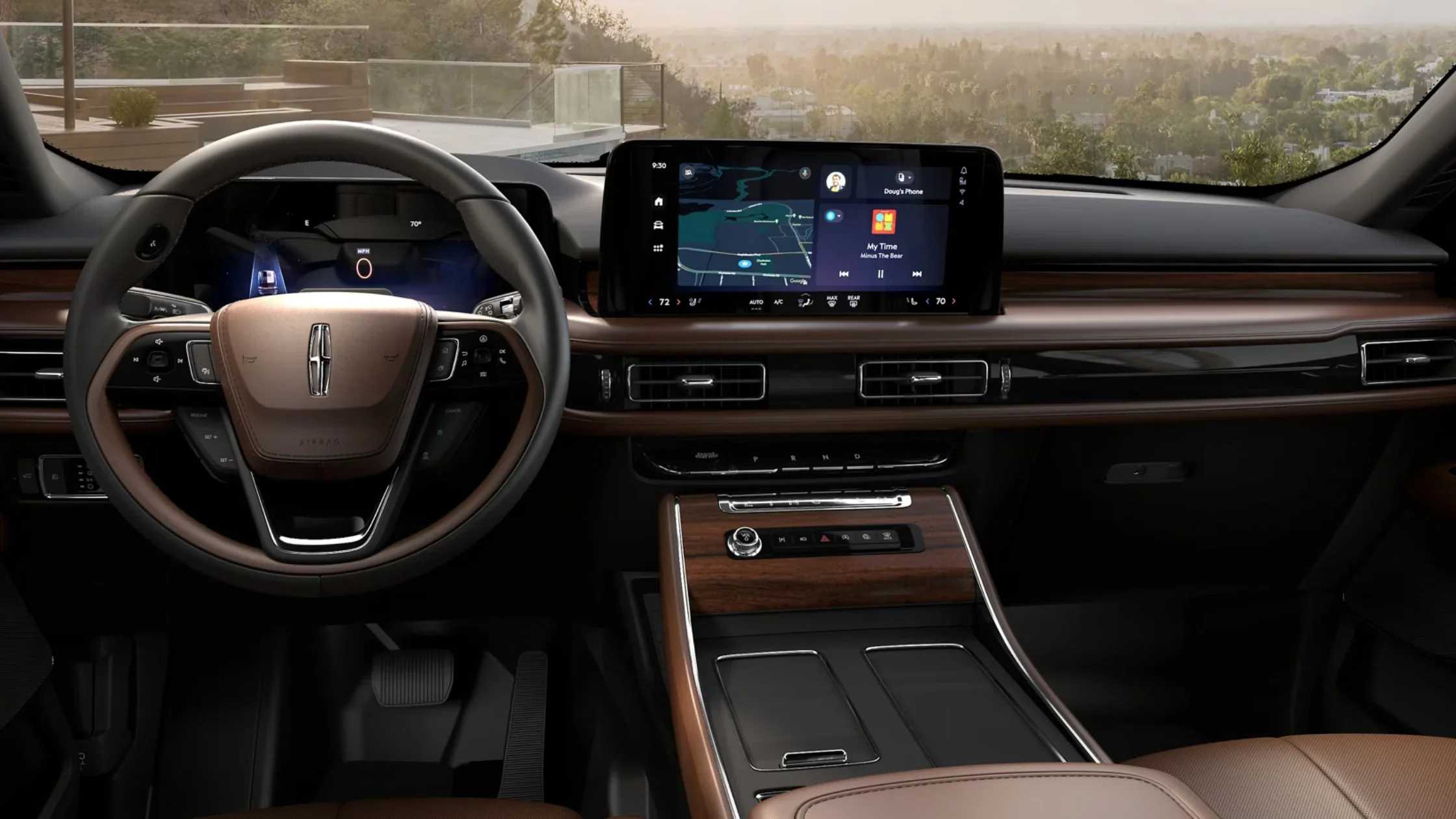
The 2025 Lincoln Aviator® Reserve features the Lincoln Digital Experience, a system designed to unify infotainment, communication, and navigation through a responsive touchscreen interface. The platform supports wireless integration with Android Auto™ and Apple CarPlay®, ensuring compatibility with modern mobile ecosystems.
Voice commands are processed through Enhanced Voice Recognition, while Alexa Built-In allows for control of media, navigation, and connected home devices without manual input. The inclusion of Lincoln Connect™ with a built-in Wi-Fi hotspot supports multiple devices simultaneously, extending connectivity to passengers across all seating positions.
Audio performance is managed through the available Revel® Ultima 3D Audio System, which utilizes 28 speakers strategically positioned throughout the cabin. The integration between cabin materials, acoustic modeling, and electronic signal processing results in precise sound reproduction that supports clarity across a wide frequency range.
Software updates are delivered via over-the-air capability, ensuring that infotainment and control systems remain current without requiring dealership service visits. The system architecture also supports integration of new driver-assistance algorithms and feature enhancements throughout the vehicle’s lifecycle.
Driver Assistance and Safety Technologies
The Lincoln Co-Pilot360™ 2.1 suite forms the foundation of the vehicle’s driver assistance systems. It integrates a series of radar, ultrasonic, and camera-based technologies to enhance vehicle awareness and response.
Adaptive Cruise Control with Stop-and-Go maintains speed and distance to preceding vehicles, automatically resuming movement once traffic clears. Lane-Keeping Assist gently corrects steering to maintain lane position. Pre-Collision Assist with Automatic Emergency Braking monitors forward paths for potential obstacles and can apply braking if the driver does not react promptly. Evasive Steering Assist provides additional steering torque during emergency maneuvers to help avoid collisions.
A key advancement is the availability of Lincoln BlueCruise®, a system that enables hands-free driving on designated Blue Zones, covering more than 97 percent of controlled-access highways in the United States and Canada. The feature includes In-Lane Repositioning, allowing subtle lateral shifts within a lane for comfort, and Lane Change Assist, which enables automated transitions between lanes when the driver initiates the signal.
Additional systems, such as Blind Spot Information System (BLIS®) with Cross-Traffic Alert and a 360-Degree Camera, provide continuous environmental awareness. Rear Parking Sensors support low-speed maneuvering in confined spaces. These technologies work in combination, allowing the 2025 Lincoln Aviator® Reserve to interpret environmental data with accuracy and react proportionally, maintaining both passenger safety and vehicle stability.
Mechanical Design and Efficiency Characteristics
The 2025 Lincoln Aviator® Reserve is constructed with a focus on efficiency and handling predictability. Its rear-wheel-drive configuration, with available all-wheel drive, contributes to balanced weight distribution and improved cornering dynamics. The aluminum-intensive platform lowers unsprung mass, enhancing both agility and ride quality.
The towing capacity, when properly configured, reaches up to 5,000 pounds, enabling the vehicle to handle moderate hauling requirements without strain on the powertrain. The aerodynamic optimization of the underbody, roofline, and grille shutters contributes to reduced air resistance and improved fuel efficiency across driving conditions.
Each component, from the electric power-assisted steering system to the ventilated disc brakes, is tuned for precise mechanical feedback. The integration between braking force, suspension geometry, and powertrain management ensures predictable deceleration and cornering performance without abrupt transitions.

Integrated Digital and Service Connectivity
Ownership of the 2025 Lincoln Aviator® Reserve extends beyond driving functionality through its integration with the Lincoln Way™ App. This platform allows users to start the vehicle remotely, schedule service appointments, and access vehicle health reports directly from a smartphone. Through this system, Lincoln also offers pickup & delivery service during the warranty period, transporting vehicles to and from maintenance appointments for added convenience.
The connectivity suite also provides access to diagnostic data, tire pressure information, and maintenance scheduling reminders. These digital features align with the brand’s engineering focus on reliability and sustained operational readiness rather than superficial convenience.